
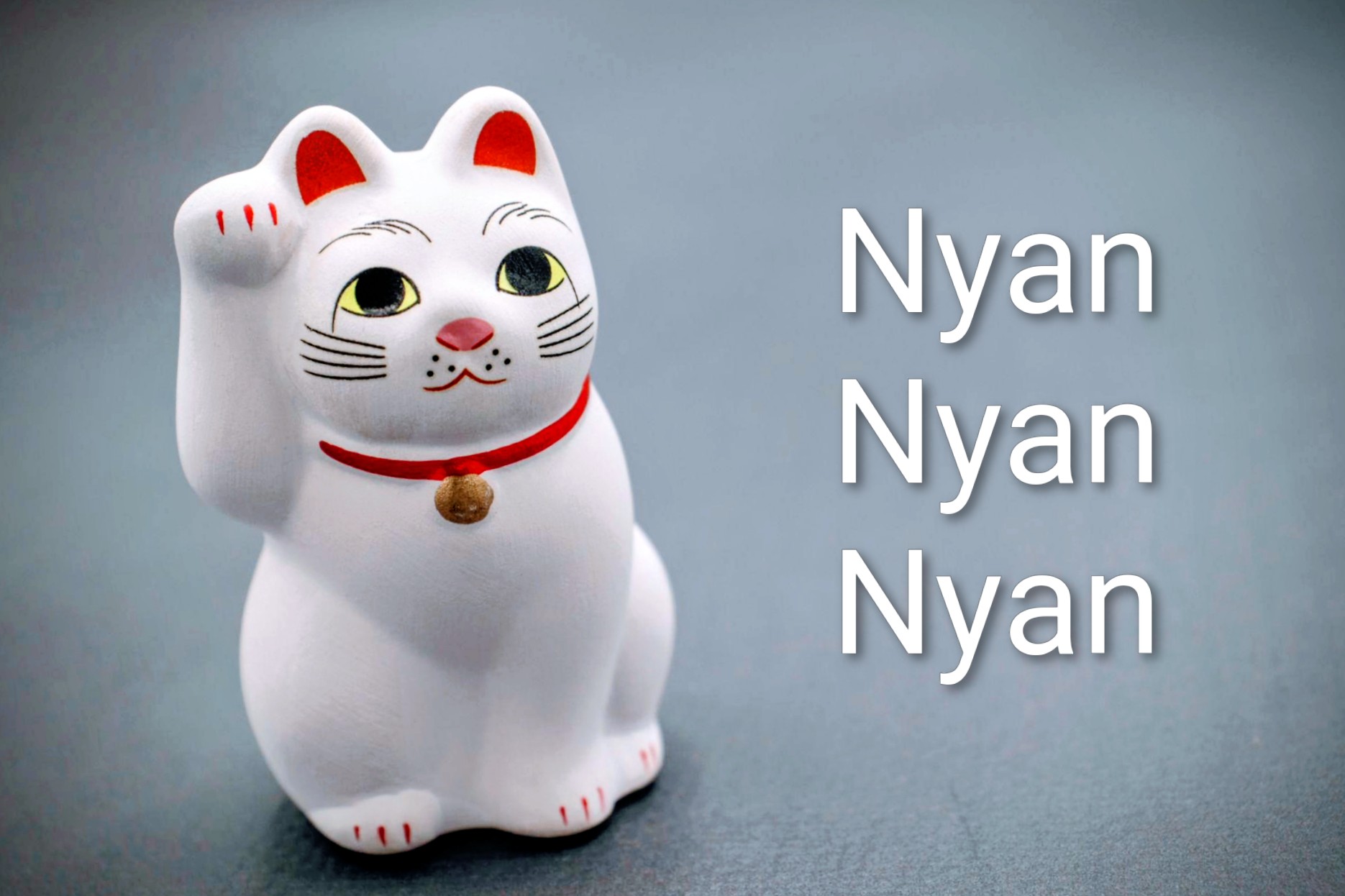
When Numbers Begin to Meow: Japan’s Nyan-Nyan-Nyan Day
On February 22 in Japan, numbers don’t simply add upp, they purr.
Two-two-two in Japanese is ni-ni-ni. Say it quickly and it softens, curls at the edges, and turns into nyan-nyan-nyan, the onomatopoeic sound of a cat’s meow. And so 2/22 becomes Neko no Hi, Cat Day, a date when language itself seems to sprout whiskers.
But this is more than a clever play on sound. In Japan, cats are not just pets stretched across sofas or perched on windowsills. They are symbols, guardians, spiritual companions, and cultural presences woven into centuries of stories. On this day, something subtle shifts in the air. Cafés fill. Social feeds bloom with feline faces. Even those who do not share their homes with a cat pause, as if responding to a distant, ancient call hidden inside those three soft syllables: nyan, nyan, nyan.
The Day the Calendar Meows
Neko no Hi was officially established in 1987 by Japan’s Executive Cat Day Committee, after a public poll chose February 22 for its irresistible wordplay. The date stuck because it feels inevitable. Numbers, after all, have always carried poetic weight in Japan. Here, sound matters. Meaning hides in syllables. A simple coincidence of pronunciation can transform an ordinary winter day into a nationwide ode to cats.
On February 22, Japan leans gently into its affection. Aoshima and Tashirojima, often called “cat islands,” resurface in viral photographs: narrow lanes overtaken by curious strays, fishing docks ruled by lounging tails and watchful eyes. In urban neighborhoods, cat cafés, from Tokyo to Osaka, host special menus and themed events. Limited-edition sweets appear in department stores shaped like paws and whiskered faces.
And yet, for all the commercial sparkle, Cat Day resists becoming merely a social media spectacle. Beneath the merchandising lies something older, a recognition.
Cats Who Guarded Temples
Cats likely arrived in Japan around the 6th century, traveling from China alongside Buddhist texts. Manuscripts were precious, fragile things, and rodents posed a constant threat. Cats, agile and attentive, became their protectors. Over time, they were welcomed into temple compounds and aristocratic households.
Their role was practical at first, guardians of knowledge, defenders of silk-producing silkworms, but gradually they gathered symbolic weight. Cats became figures of quiet watchfulness, creatures poised between worlds. Independent yet observant, affectionate yet elusive, they seemed to exist slightly outside human expectation.
No symbol captures this better than the Maneki-neko, the iconic figurine of a seated cat raising one paw in perpetual invitation. Found at the entrance of shops and homes, the Maneki-neko beckons prosperity and good fortune. One paw raised invites customers; the other, luck. Sometimes it holds a coin. Sometimes it gleams in white porcelain or glows in gold.
It is kitsch, yes — but it is also continuity. A reminder that cats in Japan are not decorative afterthoughts. They are small, domestic talismans.
A Different Kind of Celebration
In Italy, Cat Day falls on February 17, established in 1990. The choice carries symbolic meaning tied to folklore and to the cultural rehabilitation of a number once considered unlucky. Different date, different reasoning — but the same undercurrent of affection.
In Japan, however, February 22 belongs to language itself. It belongs to sound.
And perhaps that is why the celebration feels intimate. It invites not spectacle, but participation. Not noise, but attention.
Over time, a quieter way of observing Neko no Hi has taken shape — one that unfolds inside the home, between human and animal. It is not an official ritual. It has no shrine, no prescribed steps. But it carries something essential.
It is called, simply, the ritual of the three nyan.
The First Nyan: Curiosity
The first nyan begins low to the ground.
A small object rolls gently across the floor. A paper ball. A cork. Something light enough to dance unpredictably. The gesture is simple, almost absent-minded — but it is an invitation.
Curiosity flickers awake.
For centuries, this instinct defined the cat’s place in Japanese life. The alertness that once protected scrolls and silkworms still pulses beneath domesticated calm. When a cat crouches, eyes dilated, tail steady, the ancient hunter re-emerges. It is not aggression. It is alignment with nature.
The first nyan honors that spark.
We often treat pets as plush companions, soft presences designed for comfort. But cats were never meant to be ornamental. They are precise. Focused. Wired for pursuit. When we initiate play, we are not distracting them; we are acknowledging who they are.
A small rolling object can awaken centuries.
The Second Nyan: Kizuna
The second nyan is shared.
In Japanese, kizuna means bond — the invisible thread that ties beings together. It is not dramatic. It does not require declarations. It forms in repetition, in presence, in play.
A feather toy arcs through the air. A paw swipes and misses. Swipes again. The room becomes a choreography of anticipation. Eventually, the cat catches the feather.
And here lies the key: let them win.
Allowing the cat to “defeat” the toy is not indulgence; it is respect. The hunt must resolve. The story must conclude. A game without victory feels unfinished in a feline body.
When we let them triumph, we acknowledge their agency. We validate their instincts. We meet them not as masters, but as companions.
In that moment — when the feather is pinned beneath triumphant paws — kizuna tightens.
The Third Nyan: Ichigo Ichie
The third nyan is the most delicate.
In Japanese culture, there is a concept called ichigo ichie: one time, one meeting. It reminds us that every encounter is unique and unrepeatable. Even if we see someone — or some cat — every day, that specific moment will never return in the same way.
So the third nyan is stillness.
A stroke offered with full attention. A treat placed in the palm rather than tossed in a bowl. An exchanged gaze held for one heartbeat longer than usual.
It is easy to reduce affection to routine. To pet absentmindedly while scrolling. To refill a dish without looking up. But on February 22, the invitation is different. Presence replaces autopilot.
This is not grand devotion. It is awareness.
Your cat, blinking slowly in the afternoon light, is here now — and never in quite this configuration again.
Islands of Whiskers
On places like Aoshima and Tashirojima, cats outnumber people. Fishing villages that once struggled with dwindling populations found themselves redefined by feline residents. Tourists arrive with cameras. Locals leave food near docks. The rhythm of life slows.
These islands are often romanticized — and they are indeed picturesque — but they also illustrate something practical: coexistence. Humans and cats sharing limited space without hierarchy dominating the narrative.
The cats roam freely. They are not curated. They are not staged.
They simply are.
In a hyper-digital world, perhaps that is part of their appeal. Cats do not optimize themselves for productivity. They nap in sunlight. They watch. They move when they decide to move.
On Neko no Hi, their refusal to hurry feels almost philosophical.
Why Cats, Why Now?
It would be easy to dismiss Cat Day as charming trivia — a lighthearted date in a calendar increasingly crowded with themed celebrations. But the endurance of February 22 suggests something deeper.
Cats embody paradox.
They are domestic, yet untamed.
Affectionate, yet sovereign.
Present, yet unknowable.
In a culture that values harmony, subtlety, and layered meaning, the cat fits naturally. It neither demands nor withdraws entirely. It negotiates space quietly.
And perhaps that is why so many people — even those without cats — feel compelled to acknowledge this day. It is less about ownership and more about recognition.
Recognition of stillness.
Recognition of instinct.
Recognition of companionship that does not rely on words.
Three Soft Syllables
By evening on February 22, the internet quiets. The limited-edition desserts are eaten. The themed merchandise begins to disappear from shelves.
But somewhere in an apartment in Tokyo, or Osaka, or Kyoto, a small ritual unfolds.
A ball rolls.
A feather falls.
A hand rests gently on fur warmed by indoor heat.
Nyan.
Nyan.
Nyan.
The numbers return to being numbers after midnight. Two-two-two resumes its arithmetic neutrality.
Yet something lingers.
Because for one winter day, language bent toward tenderness. The calendar softened. And an entire country paused — not loudly, not dramatically — but attentively.
When numbers begin to meow, perhaps they are reminding us of something simple: that meaning is often hidden in sound, that presence can be ritual, and that even the smallest creature can hold centuries of story in its steady, unblinking gaze.