International Women’s Day (March 8): History, Meaning, and How It’s Celebrated Around the World
Every year on March 8, people across the globe celebrate International Women’s Day (IWD) — a day dedicated to recognizing the achievements of women and promoting gender equality.
For travelers, backpackers, and hostel communities, it’s also a moment to reflect on cultural traditions, social progress, and the inspiring role women play in societies worldwide. From Europe to Asia, Africa to the Americas, International Women’s Day is marked by events, celebrations, and meaningful gestures of appreciation.
The Origins of International Women’s Day
International Women’s Day has its roots in the early 20th century, during a period of growing movements for workers’ rights and gender equality.
Some key milestones include:
- 1909 – The first National Women’s Day was observed in the United States.
- 1910 – At a conference in Copenhagen, activist Clara Zetkin proposed an international day dedicated to women’s rights.
- 1911 – The first official International Women’s Day was celebrated in Austria, Denmark, Germany, and Switzerland.
- 1917 – Women workers in Russia protested for “bread and peace,” helping establish March 8 as the official date.
- 1975 – The United Nations officially recognized International Women’s Day, expanding its global importance.
Today, the day is celebrated in more than 100 countries, with both festive and educational events.
What International Women’s Day Represents
International Women’s Day is both a celebration and a reminder.
It celebrates women’s achievements in fields such as:
- science
- education
- politics
- art and culture
- business and entrepreneurship
At the same time, it highlights the ongoing work needed to achieve equal opportunities and rights worldwide.
Each year, organizations and communities focus on themes such as empowerment, leadership, education, and inclusion.
A Special Tradition in Italy: The Mimosa Flower
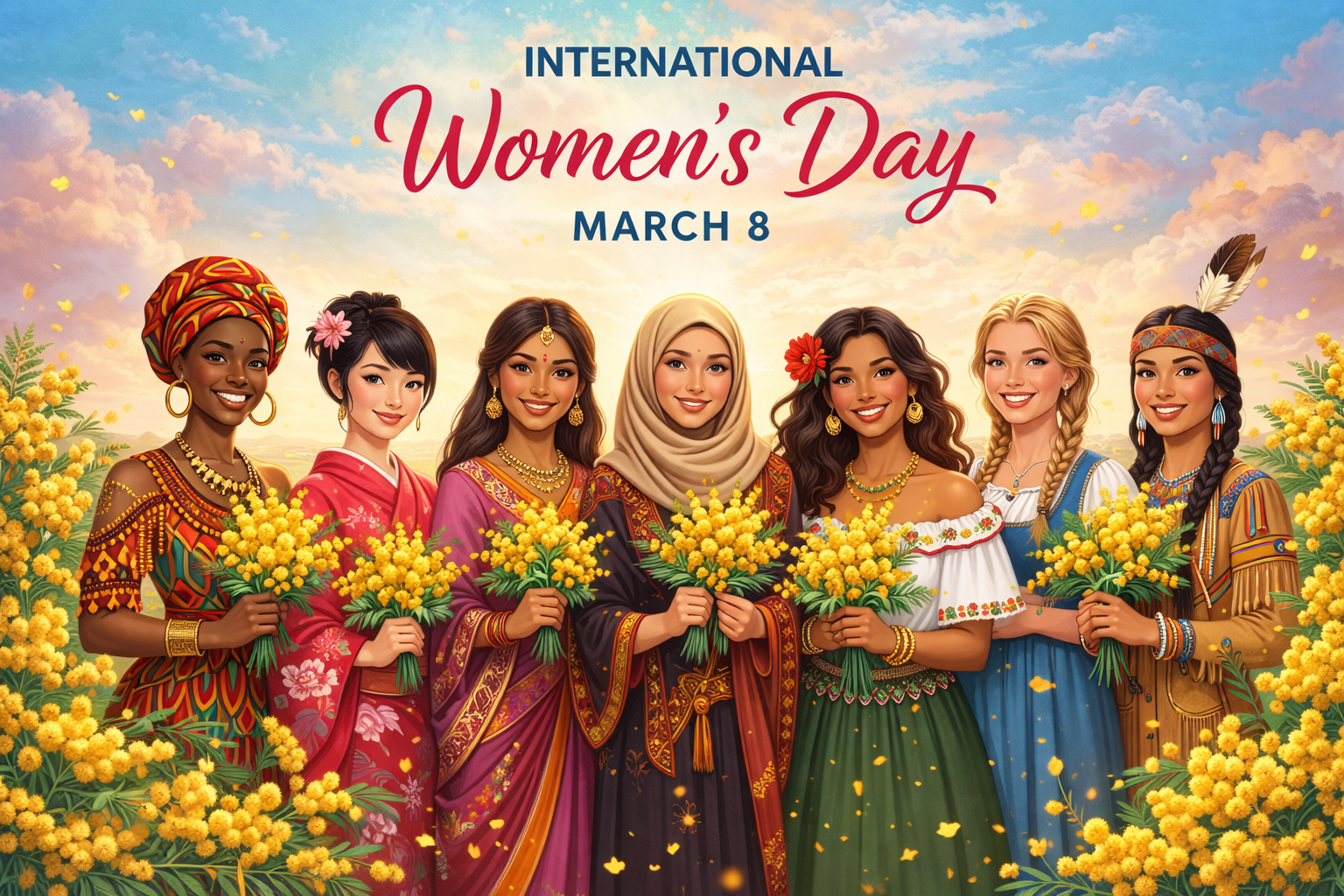
In Italy, the symbol of Women’s Day is the mimosa flower.
This tradition began in 1946, when Italian women’s organizations chose mimosa as the symbol of the celebration because it blooms in early March and is widely available.
Today it is common to give small bouquets of mimosa flowers to friends, mothers, partners, colleagues, and sisters as a sign of appreciation and solidarity.
If you happen to be traveling in Italy on March 8, you’ll notice:
- street vendors selling mimosa branches
- restaurants offering special dinners
- groups of women celebrating together in cities like Rome, Milan, and Florence
It’s a colorful and joyful tradition that adds a unique cultural touch to the day.
How the World Celebrates
International Women’s Day is celebrated differently depending on the country, but common activities include:
- cultural events and exhibitions
- public discussions about gender equality
- concerts, festivals, and community gatherings
- social campaigns promoting women’s empowerment
In many cities around the world, museums, cultural centers, universities, and community groups organize special programs dedicated to women’s achievements and history.
Why It Matters for Travelers
Travel is one of the most powerful ways to experience different cultures and perspectives. International Women’s Day offers a unique opportunity to learn how different societies celebrate women and promote equality.
Whether you’re staying in a hostel in Europe, exploring cities in Asia, or backpacking across South America, March 8 is a day that brings people together with a shared message:
respect, recognition, and equality for women everywhere.
Happy International Women’s Day!